

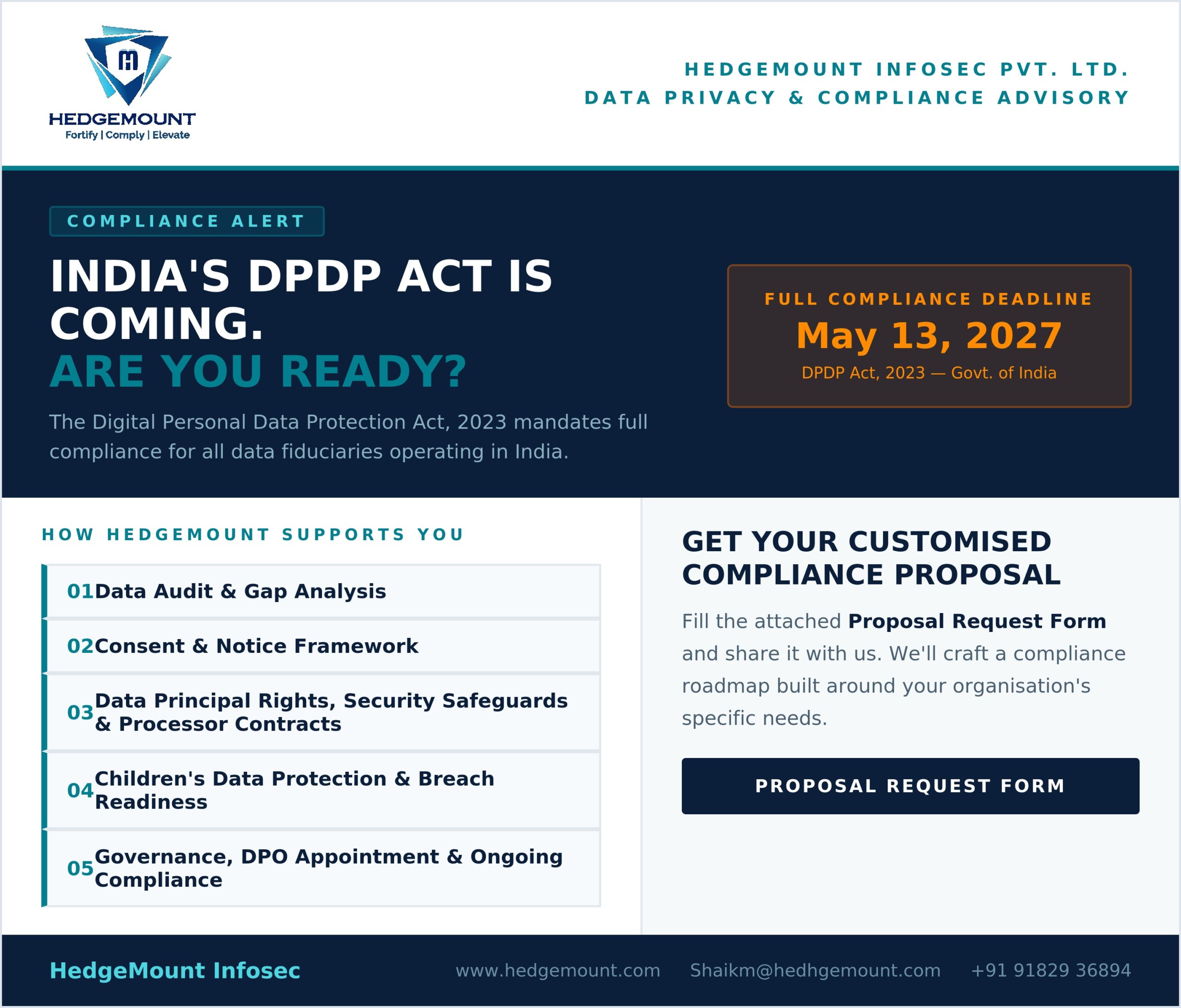
Data has become one of the most valuable assets for modern organizations. Every business today collects, stores, processes, and shares personal information—whether it belongs to customers, employees, vendors, or business partners. With increasing digital transformation and growing concerns about data privacy, India has introduced the Digital Personal Data Protection (DPDP) Act, 2023 to establish a comprehensive framework for protecting personal data.
The official deadline for full compliance with the DPDP Act and Rules is May 13, 2027. While this may seem like a distant milestone, achieving compliance requires significant planning, governance, technology implementation, policy updates, and employee awareness. Organizations that delay their preparation may face operational challenges, compliance gaps, and regulatory risks.
What is the DPDP Act?
The Digital Personal Data Protection (DPDP) Act is India’s primary data privacy legislation designed to regulate the processing of digital personal data. It establishes the rights of individuals (Data Principals) while defining the responsibilities of organizations (Data Fiduciaries) that collect and process personal information.
The Act promotes responsible data handling practices and strengthens transparency, accountability, and trust between organizations and individuals.
Why DPDP Compliance Matters
DPDP compliance is more than a legal obligation—it is an opportunity to strengthen your organization’s overall data governance and cybersecurity posture.
Organizations that proactively prepare for compliance can:
- Enhance customer trust and confidence
- Improve data governance practices
- Reduce privacy and cybersecurity risks
- Strengthen regulatory readiness
- Demonstrate commitment to responsible data handling
- Improve operational efficiency through better data management
Key Requirements Under DPDP
Organizations should establish a structured privacy program covering the following areas:
Data Inventory
Identify and document the personal data collected, processed, stored, and shared across the organization.
Consent Management
Implement processes for obtaining, managing, recording, and withdrawing user consent where applicable.
Privacy Notices
Ensure privacy notices are clear, transparent, and easily accessible to individuals.
Data Retention
Define retention schedules and securely delete personal data when it is no longer required.
Access Controls
Restrict access to personal data based on business need and implement strong identity and access management controls.
Incident Response
Develop procedures for identifying, managing, investigating, and reporting personal data breaches.
Third-Party Risk Management
Review vendors and service providers that process personal data to ensure appropriate contractual and security controls are in place.
Employee Awareness
Train employees on privacy obligations, secure handling of personal data, and incident reporting procedures.
Common Challenges Organizations Face
Many organizations discover during assessments that they lack:
- A complete inventory of personal data
- Documented privacy policies
- Data classification frameworks
- Consent management mechanisms
- Vendor privacy assessments
- Breach response procedures
- Privacy governance roles and responsibilities
- Employee awareness programs
Addressing these gaps takes time, making early preparation essential.
How to Prepare Before May 13, 2027
A practical approach to DPDP readiness includes:
Step 1: Conduct a Gap Assessment
Evaluate your current privacy practices against DPDP requirements and identify areas requiring improvement.
Step 2: Develop a Privacy Framework
Create governance structures, policies, procedures, and accountability mechanisms for data protection.
Step 3: Classify Personal Data
Understand what personal data is collected, where it resides, who has access, and how it is processed.
Step 4: Strengthen Security Controls
Implement technical safeguards such as encryption, access controls, monitoring, vulnerability management, and secure backups.
Step 5: Review Third-Party Relationships
Assess vendors that process personal data and ensure appropriate contractual and security obligations are in place.
Step 6: Train Employees
Privacy compliance depends on people as much as technology. Regular awareness programs help reduce human error and improve compliance.
Why Organizations Should Start Now
Waiting until the compliance deadline can result in rushed implementations, increased costs, and operational disruption.
Starting early allows organizations to:
- Plan investments effectively
- Prioritize remediation activities
- Integrate privacy into existing business processes
- Build customer confidence
- Reduce compliance risks before regulatory deadlines
How HedgeMount Infosec Can Help
HedgeMount Infosec provides end-to-end DPDP compliance services to help organizations build sustainable privacy programs.
Our services include:
- DPDP Readiness Assessment
- DPDP Gap Assessment
- Privacy Risk Assessment
- Data Mapping & Data Inventory
- Privacy Policy & Procedure Development
- Consent Management Advisory
- Third-Party Risk Assessment
- Privacy Governance Framework
- Security Control Assessment
- Employee Awareness Training
- Implementation Support
- Compliance Documentation
- Ongoing Advisory Services
Our consultants work closely with organizations to simplify the compliance journey while aligning privacy initiatives with business objectives.
Conclusion
The May 13, 2027 DPDP compliance deadline represents an important milestone for organizations operating in India. Compliance is not simply about meeting regulatory requirements—it is about building trust, protecting personal data, and strengthening organizational resilience.
Organizations that begin their compliance journey today will be better positioned to reduce risk, improve governance, and demonstrate their commitment to responsible data protection.
If your organization has not yet initiated its DPDP readiness program, now is the ideal time to assess your current state and develop a structured roadmap toward compliance.
Need help with DPDP compliance?
HedgeMount Infosec can assist you with assessments, implementation, governance, training, and ongoing advisory services to help your organization achieve DPDP readiness with confidence.